Skip to main content

What Does a Personal Representative Do in a New Mexico Wrongful Death Case?
Understanding the Person Who Carries a Family’s Wrongful Death Claim Forward
Key Takeaways: In New Mexico, a personal representative is the individual legally authorized to file and pursue a wrongful death lawsuit on behalf of a deceased person’s surviving family, with authority from the wrongful death statute (NMSA 1978 § 41-2-3). This person files the claim in their own name and acts as a "statutory trustee," holding any recovery for beneficiaries. The role centralizes claims and prevents conflicting lawsuits. Proceeds are distributed according to a statutory hierarchy among surviving spouse, children, grandchildren, parents, and siblings, and are generally protected from the decedent’s creditors when certain relatives survive. Families must act within New Mexico’s three-year statute of limitations from the date of death.
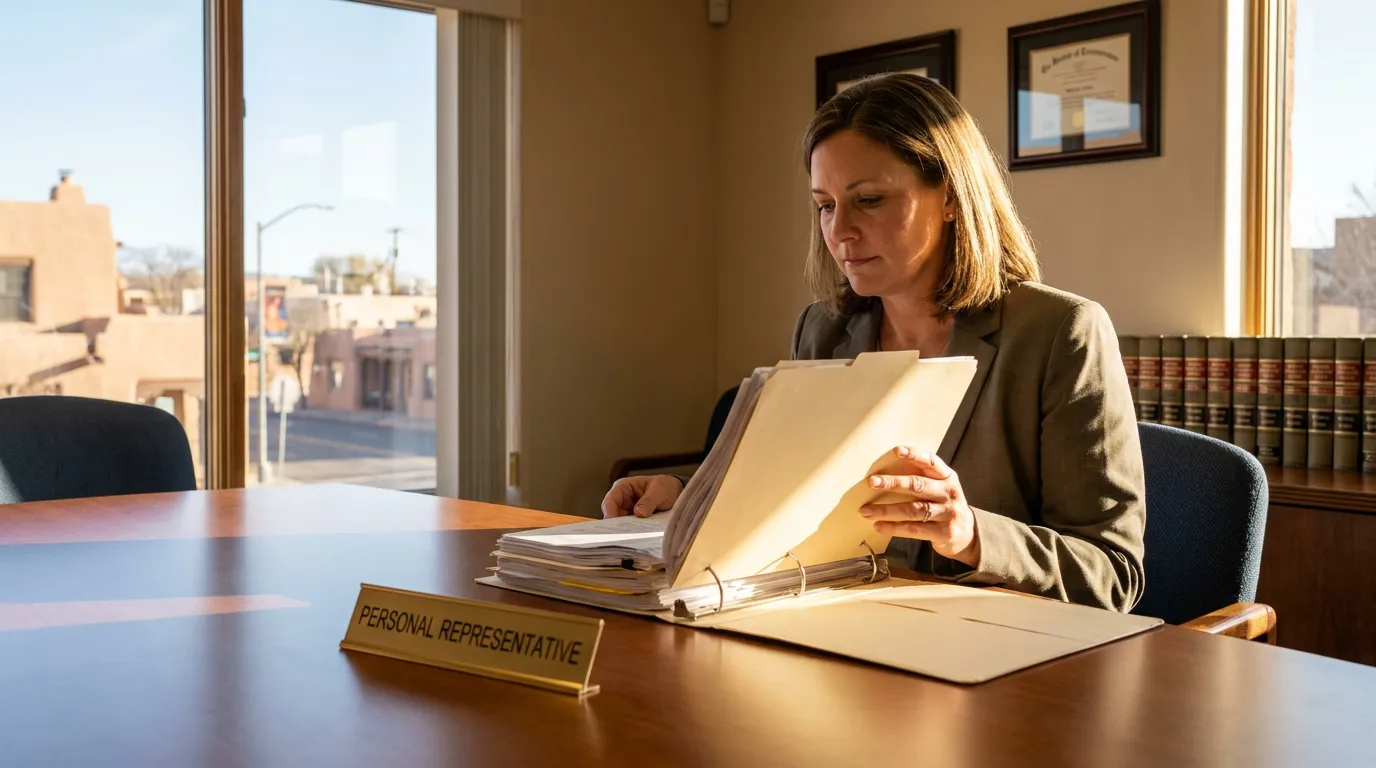
A personal representative is the individual legally authorized to file and pursue a wrongful death lawsuit on behalf of a deceased person’s surviving family in New Mexico. When a loved one dies because of another party’s negligence, the law requires a single person to bring the claim and hold any recovery for the family. Under New Mexico law, every wrongful death action "shall be brought by and in the name of the personal representative of the deceased person."
If your family is trying to understand this role after a sudden loss, you do not have to navigate it alone. The compassionate team at Hendler Flores Law helps families understand their rights and next steps. You can call us at 1.800.443.6353 or reach out through our confidential case review form to talk through your situation.

Who Qualifies as a Personal Representative Under the NM Wrongful Death Act
The personal representative is a court-recognized individual whose authority comes directly from the wrongful death statute, not from ordinary estate administration. This distinction matters because the role is narrower and more specific than being an executor of a will. The authority to sue "flows entirely from the wrongful death statute itself and not from the probate or other estate laws."
Courts read the term "personal representative" broadly under the wrongful death statutes. The scope includes temporary, special, and ancillary administrators, and an administrator de bonis non when the regular administrator refuses to sue. Because appointment can depend on specific facts, families should confirm the right procedure for their circumstances.
Why This Role Exists
The personal representative exists to centralize a family’s claim and prevent competing lawsuits. Multiple relatives suing separately could create contradictory results and drain potential recovery. The personal representative stands in the place of statutory beneficiaries, to centralize claims and prevent multiple lawsuits.
Core Duties of the nmsa 41-2-3 personal representative
The nmsa 41-2-3 personal representative carries several defined responsibilities, beginning with filing the lawsuit in their own name. New Mexico law requires that a wrongful death action be filed by and in the name of the personal representative of the deceased, making this role legally mandatory. The governing statute is NMSA 1978 § 41-2-3, which works together with the liability provision in NMSA 1978 § 41-2-1.
A second central duty is acting as a "statutory trustee" for the family members entitled to recover. The representative does not keep any recovery personally. The personal representative who makes a recovery serves as a trustee, a "statutory trustee," for discoverable and identifiable beneficiaries in the line of named kinship or descent. That fiduciary framing means the representative owes loyalty to the statutory beneficiaries in NM, not to their own interests. Where none of the named kin survive, the representative holds any recovery for the estate’s creditors and the state.
The underlying claim rests on proof that the death resulted from another party’s wrongful conduct. The cause of action is codified at NMSA 1978 § 41-2-1, which creates liability when a death is caused by the wrongful act, neglect, or default of another. You can review the full text of the New Mexico wrongful death statutes through the state’s published Chapter 41, Article 2 code sections.
Practical Tasks That Often Fall to the Representative
In practice, the personal representative’s involvement extends beyond signing a complaint. Common tasks include:
- Working with a wrongful death lawyer NM families trust to preserve evidence and identify liable parties
- Communicating with statutory beneficiaries about case status
- Distributing any settlement or judgment according to the statutory scheme
- Making litigation decisions in the beneficiaries’ interest
💡 Pro Tip: Ask early whether the person being considered for the role is willing and able to serve through what can be a multi-year process, because a representative who cannot fulfill the duties may need to be replaced.
How Wrongful Death Proceeds Are Distributed in New Mexico
New Mexico sets out a fixed hierarchy for distributing wrongful death proceeds among surviving family members. The statute controls who receives recovery and in what order. For example, when a decedent leaves a spouse with children or grandchildren, proceeds are divided one-half to the spouse and one-half to the children and grandchildren. If there is no spouse, but a child or grandchild, the proceeds pass to such child and grandchild by right of representation.
These proceeds generally receive protection from the decedent’s creditors when certain relatives survive. The proceeds of any judgment shall not be liable for any debt of the deceased, provided the decedent has left a spouse, child, father, mother, brother, or sister, but shall instead be distributed according to the statutory scheme.
| Surviving Relatives | General Distribution Approach |
|---|---|
| Spouse and children | Shared per the statutory hierarchy |
| No spouse, but child or grandchild | To child and grandchild by right of representation |
| Parents or siblings, no closer kin | Distributed further down the statutory order |
| No listed relatives | Per rules for personal property of the deceased |
The jury’s role in setting damages is also defined by statute. The jury may give damages, compensatory and exemplary, as they deem fair and just, taking into consideration the pecuniary injury and also having regard to the mitigating or aggravating circumstances. The precise statutory language on distribution and damages appears in the published text of NMSA § 41-2-3.
Deadlines, Limitations, and Common Challenges
One of the most important responsibilities is filing within the deadline. New Mexico generally imposes a three-year statute of limitations on wrongful death claims. Under NMSA 1978 § 41-2-2, a wrongful death action must be brought within three years after the cause of action accrues, with the accrual date fixed as the date of death. Because this limitation has been held to bar the right to sue and not merely the remedy, a family that waits too long can lose the claim entirely.
Families should understand that tolling or delayed-discovery arguments do not apply automatically. New Mexico courts have generally declined to read a discovery rule into the Wrongful Death Act, so the clock typically runs from the date of death even when wrongful conduct is not discovered until later. A separate statute may affect the deadline in narrow situations, but relief is not guaranteed. A civil statute of limitations is distinct from any government administrative claim deadline, which can be shorter, and claims involving licensed health care providers may fall under the separate Medical Malpractice Act. Because timing questions carry significant consequences, consult counsel promptly.
Another practical challenge is choosing and appointing the right person to serve. Disagreements among relatives, out-of-state family members, or the absence of any obvious candidate can complicate the process. For deeper background on how New Mexico courts have interpreted the role, the University of New Mexico School of Law publishes scholarship on this topic, including an article on personal representative status in wrongful death actions. You can also find related guidance on our firm’s legal insights page.
💡 Pro Tip: Keep a clear record of medical bills, funeral expenses, and lost income early, because documenting damages while memories and records are fresh often strengthens a New Mexico wrongful death case.
Frequently Asked Questions
1. Does the personal representative have to be a family member?
Not necessarily. The role can be filled by various court-appointed individuals, including temporary, special, and ancillary administrators. The right choice depends on your family’s specific situation.
2. Who receives the money from a wrongful death recovery?
The statutory beneficiaries do, not the representative personally. The personal representative serves as a statutory trustee for beneficiaries in the line of named kinship or descent. Distribution follows the fixed hierarchy set out in the statute.
3. How long do we have to file a wrongful death claim in New Mexico?
Generally three years from the date of death. The statute of limitations is three years, measured from the date of death. Exceptions may exist in limited circumstances, but courts apply them narrowly, so acting promptly is important.
4. Is this role the same as being the executor of the estate?
No. The authority to bring a wrongful death claim is separate from estate administration. It flows entirely from the wrongful death statute itself and not from the probate or other estate laws.
5. Why does New Mexico require a single personal representative?
To keep claims organized and protect the family. The personal representative stands in the place of statutory beneficiaries, to centralize claims and prevent multiple lawsuits. This avoids conflicting outcomes and preserves recovery for those entitled to it.
Moving Forward With Confidence After a Devastating Loss
The personal representative sits at the center of every New Mexico wrongful death action, filing the claim, protecting the recovery, and standing in for the family the law is designed to help. From meeting the three-year deadline to honoring the statutory distribution scheme under NMSA 1978 § 41-2-3, the role carries real responsibility for grieving families. Understanding these duties early can make a meaningful difference in how a case unfolds. Our attorneys are ready to help you understand your options in a New Mexico wrongful death matter.
You should not have to shoulder these legal questions while grieving. The dedicated team at Hendler Flores Law is here to listen and explain your rights with compassion. Call us today at 1.800.443.6353 or connect with us through our get in touch page to discuss how we can help your family move forward.