Skip to main content

How Trucking Company Negligence Contributes to 18-Wheeler Crashes in Texas
Why Texas Trucking Companies Can Share the Blame for Serious Crashes
Key Takeaways: Trucking company negligence can contribute to 18-wheeler crashes in Texas through decisions made well before a truck hits the road, such as hiring unqualified drivers, inadequate training, poor maintenance, improper loading and unrealistic delivery schedules. Chapter 72 of the Texas Civil Practice and Remedies Code sets specific rules for commercial vehicle injury and death cases, and those rules reach companies that own, lease or control trucks or their drivers. Trucking defendants can ask for a two-phase trial that limits safety violation evidence in phase one. Some direct claims, such as negligent entrustment, may be heard in phase two, only after the jury finds the driver negligent. Calling a driver an independent contractor may not shield the carrier, because Chapter 72 defines "employee" broadly. Driver logs, maintenance files and black box data can be lost or overwritten, so preserving them early may help families pursue accountability from every responsible party.
When an 18-wheeler crash turns your life upside down, the driver behind the wheel may not be the only party responsible. Trucking company negligence can contribute to a crash long before the truck reaches the highway. Hiring unsafe drivers, skipping maintenance, overloading trailers and pushing drivers past safe limits are some examples. Texas law has a specific framework for commercial truck injury and death lawsuits, and it reaches the companies that own, lease or control these vehicles.
If you or someone you love has been hurt in a big rig crash, Hendler Flores Law is ready to listen. Every client has access to Scott Hendler, our CEO and Managing Partner. We offer free consultations in English and Spanish. Call 800-443-6353 or contact us now. Your story matters. Let us help you tell it.
The Scale of Big Rig Crash Risk in Texas
Texas has one of the most serious large truck crash problems in the country. Federal Motor Carrier Safety Administration (FMCSA) data lists Texas among the states with the highest numbers of fatal large truck crashes. The FMCSA’s fatal truck crashes by state table tracks annual counts from 2010 through 2020.
These numbers represent people. Behind each fatal crash is a family dealing with grief, medical bills, lost income and questions about what went wrong. Statistics give useful context, but they cannot prove what caused any single crash.
How Federal Data Categorizes Truck Crashes
The FMCSA sorts fatal large truck crashes by "most harmful event." Examples include collision with another moving vehicle, jackknifing, overturning and hitting a fixed object. These categories do not establish fault, but they can help an investigation focus on practices such as improper loading, poor maintenance or driver fatigue.
Common Forms of Trucking Company Negligence
Trucking company negligence usually begins with decisions made in offices, dispatch centers and maintenance yards. Carriers control hiring, training, scheduling and equipment. Causes that may point to the carrier include:
- Negligent hiring or entrustment: giving a truck to a driver with a poor safety record or no proper qualifications
- Inadequate training: sending drivers out unprepared for heavy loads, bad weather or difficult routes
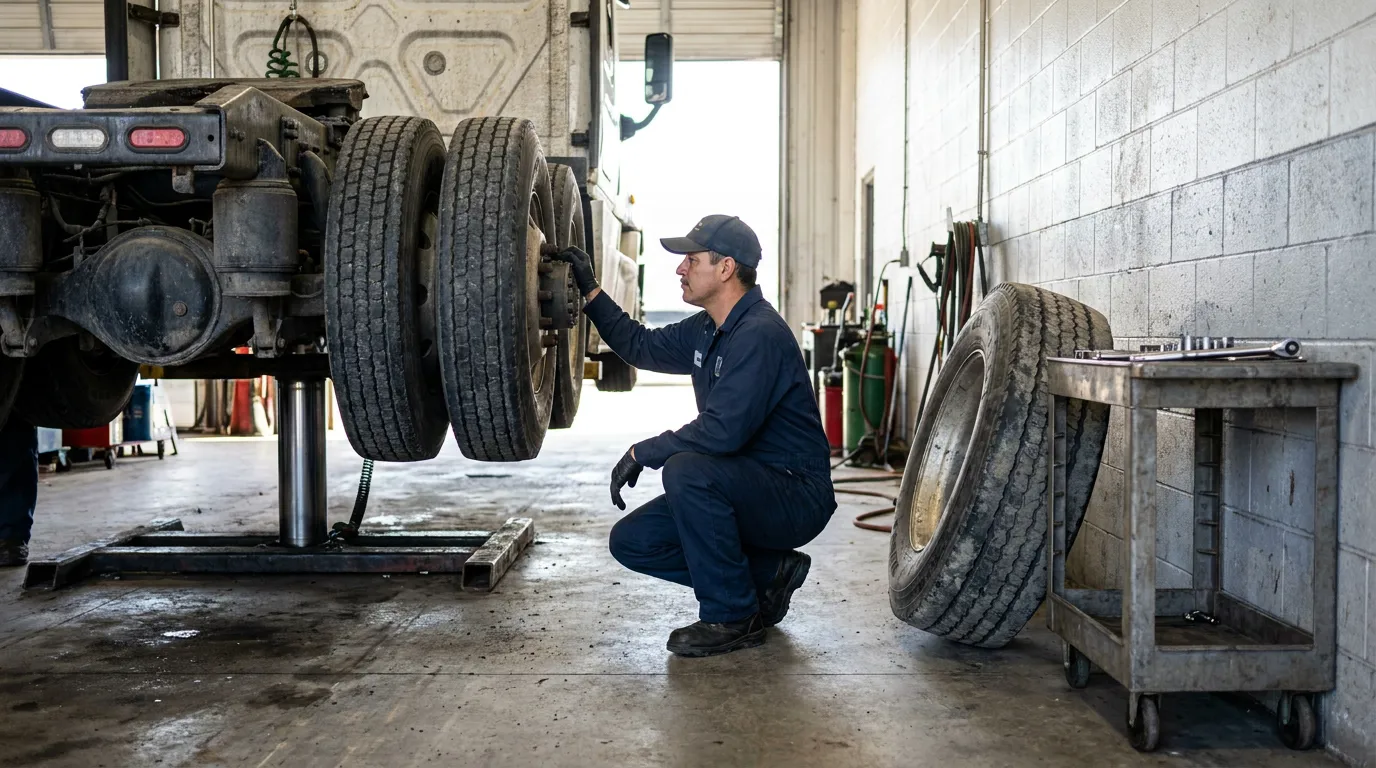
- Poor maintenance: neglecting brakes, tires, lights or coupling equipment
- Improper loading: overloaded or unbalanced cargo that can contribute to rollovers or jackknifes
- Unrealistic schedules: delivery pressure that may encourage speeding, fatigue or distracted driving
Whether any of these practices caused a specific crash depends on the evidence. Driver logs, maintenance records, dispatch communications, electronic data and hiring files often play a central role. Trucking companies control many of these records, so acting early to preserve them matters.
💡 Pro Tip: Keep every letter, email or settlement offer from a trucking company or its insurer. Do not give a recorded statement before you understand your rights, because insurers may later use your words to limit your claim.
How Texas Law Defines Trucking Company Liability
Subchapter B of Chapter 72 of the Texas Civil Practice and Remedies Code includes rules written specifically for commercial vehicle injury and death cases. They generally apply when a claimant seeks damages for bodily injury or death from a collision with a commercial motor vehicle and a defendant drove the vehicle or owned, leased or otherwise controlled it or its driver. The legislature added these provisions in 2021 through H.B. 19 and amended them in 2023 through H.B. 2190. You can read the full Texas commercial vehicle statute online.
Which Vehicles and Workers Are Covered
Texas defines "commercial motor vehicle" broadly. Under Tex. Civ. Prac. & Rem. Code § 72.051, the term covers a motor vehicle used for commercial purposes in interstate or intrastate commerce to carry property or passengers, deliver goods or provide services, including a trailer it pulls. "Operating" a truck includes driving, stopping and parking it, as well as a truck that has become disabled. That can matter when a crash involves a semi parked on a shoulder.
The definition of "employee" is also broad. Under § 72.051, it covers a person who works for compensation, anyone treated as an employee under state or federal law and any agent the employer may be liable for under respondeat superior. Carriers sometimes call drivers independent contractors, but that label alone does not settle the question. The actual working relationship matters.
When the Employer Admits the Driver Was Working
An employer can choose to admit that the driver was its employee acting within the scope of employment. Under Tex. Civ. Prac. & Rem. Code § 72.054, if the employer stipulates to this within the deadline for filing a bifurcation motion, its liability for the driver’s ordinary negligence generally rests only on respondeat superior. Statutory exceptions exist, including one that preserves certain claims for exemplary damages based on the employer’s own conduct. An attorney should review whether an exception applies in your case.
How a Texas 18-Wheeler Accident Claim May Proceed at Trial
Texas allows trucking defendants to ask the court to split the trial into two phases. Under Tex. Civ. Prac. & Rem. Code § 72.052, the court must bifurcate the trial if a defendant files a timely motion. The deadline is the later of 120 days after the defendant files its original answer or 30 days after the claimant files a pleading that adds a claim or party.
| Trial Phase | What Is Decided | Key Rules |
|---|---|---|
| Phase One | Liability and compensatory damages | Safety violation evidence is limited (§ 72.053(a)-(b)) |
| Phase Two | Liability for and amount of exemplary damages | Direct negligence claims and other regulatory violations may be presented (§§ 72.052(e), 72.053(c)) |
Safety Violation Evidence in Phase One
Evidence of a safety violation does not automatically come in during the first phase. Under Tex. Civ. Prac. & Rem. Code § 72.053(a)-(b), it is admissible only if it tends to show the violation was a proximate cause of the injury or death. The regulation or standard must also be specific and govern, or be part of a duty of care owed by, the defendant, its employee, or its property or equipment.
Direct Claims Against the Company in Phase Two
A phase-one finding that the driver was negligent can open the door to certain direct claims against the carrier. Under § 72.052(e), if the injured person first proves the driver was negligent, they may pursue claims against the employer in phase two that depend on that negligence, such as negligent entrustment. Section 72.053(c) also allows a claimant to offer evidence in phase two that the company violated other applicable regulations or standards when seeking exemplary damages under Chapter 41.
💡 Pro Tip: Early strategic decisions in a semi-truck accident case, including which claims to plead and when, can affect what evidence a jury hears later. Talk with counsel before the defense’s bifurcation deadline passes.
Pursuing Truck Accident Injury Compensation
Families harmed by a trucking company’s choices may be able to seek compensation for the full impact of the crash. Depending on the facts, damages may include medical expenses, future care, lost income, reduced earning capacity, pain and suffering, and wrongful death losses. Exemplary damages are limited. Chapter 41 generally requires clear and convincing proof of fraud, malice or gross negligence and a unanimous jury, and it caps the amount in most cases. Under Texas’s proportionate responsibility rules, your recovery may be reduced by your share of fault, and you cannot recover if you are found more than 50% responsible. Most injury and wrongful death claims must be filed within two years. No outcome is guaranteed.
Working with an experienced Texas truck accident lawyer can help you investigate every responsible party. Carriers’ insurers often respond quickly after a crash. Your side may need to move just as quickly to secure black box data, logs and maintenance files before they are lost or overwritten.
Frequently Asked Questions
1. Can I sue the trucking company and not just the driver?
In many cases, yes. Chapter 72 applies to defendants who owned, leased or controlled the truck or its driver. The company may be liable through respondeat superior or direct negligence claims, depending on the facts. If the company stipulates that the driver was acting within the scope of employment, some direct claims may be limited.
2. What if the company says the driver was an independent contractor?
Under § 72.051, "employee" includes anyone treated as an employee under state or federal law and agents covered by respondeat superior. The carrier’s label alone does not decide the issue.
3. Can a jury hear that the trucking company violated safety rules?
Possibly. In phase one, the evidence must meet the proximate cause and specificity requirements of § 72.053(a)-(b). Other violations may be relevant to exemplary damages in phase two.
4. What is negligent entrustment?
Negligent entrustment is a direct claim that a company should not have allowed a particular driver to operate its truck. In a bifurcated trial, § 72.052(e) allows this claim to proceed in phase two only after the claimant proves in phase one that the driver was negligent.
5. Does Chapter 72 apply to parked or broken-down trucks?
It can. The statute’s definition of "operating" includes stopping, parking and a truck that has become disabled.
Holding Negligent Carriers Accountable
Trucking company negligence can turn an ordinary drive into a life-changing event. Texas law provides a detailed framework for these cases, but trial phases, evidence rules and employer admissions can complicate a claim. Preserving evidence early and understanding Chapter 72 may strengthen your path toward accountability. For more guidance, explore our truck accident legal resources.
At Hendler Flores Law, we believe every family deserves to be heard. Free consultations are available in English and Spanish, and every client has access to Scott Hendler. Call 800-443-6353 or schedule your free consultation today. Let us help you tell your story.
Disclaimer: This content is for informational purposes only and is not legal advice. Every case is unique, and results may vary. Consult an attorney about your specific circumstances.